
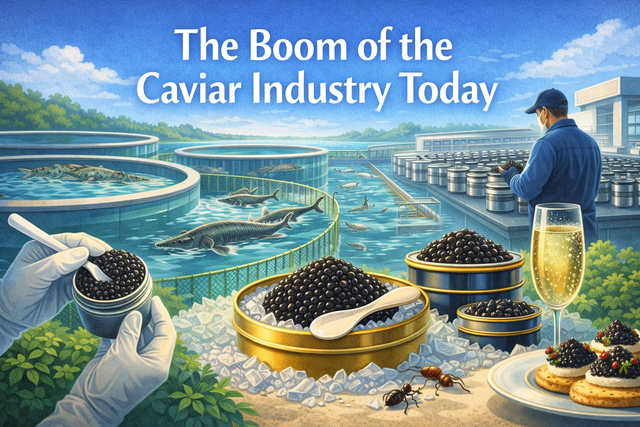
The Boom of the Caviar Industry Today
A Legacy of Luxury
For centuries, caviar has symbolized wealth, prestige, and refined taste. Once served at royal banquets and aristocratic feasts, the delicate pearls of salted sturgeon roe became synonymous with celebration and exclusivity. Originating primarily from the Caspian Sea region, caviar was historically harvested from wild Beluga, Osetra, and Sevruga sturgeon. Its rarity and the long maturation period of sturgeon made it a product reserved for the elite. Over time, caviar developed not only as a delicacy but also as a cultural icon representing sophistication and indulgence.
The Decline of Wild Sturgeon
The 20th century brought serious challenges to traditional caviar production. Overfishing, illegal poaching, pollution, and habitat destruction drastically reduced wild sturgeon populations. As global demand increased, natural stocks could not keep pace. By the early 2000s, international organizations such as CITES imposed strict regulations and trade bans to protect endangered sturgeon species. While these measures were necessary for conservation, they forced the industry to rethink its dependence on wild harvesting. What initially seemed like a devastating setback ultimately became the catalyst for a major transformation.
The Rise of Sustainable Aquaculture
In response to environmental restrictions, aquaculture emerged as the future of caviar production. Modern sturgeon farms began to develop in countries including China, Italy, France, the United States, and Israel. These facilities use advanced water filtration systems, controlled feeding programs, and scientific breeding techniques to ensure consistent quality and supply. Today, farmed caviar accounts for the vast majority of the global market. By raising sturgeon in carefully monitored environments, producers have reduced pressure on wild populations while creating a more predictable and scalable business model.
China’s Growing Dominance
One of the most significant developments in the modern caviar boom is China’s rise as a leading producer. With large-scale farms and substantial investment in technology, China supplies a significant share of the world’s farmed caviar. Chinese producers have partnered with European distributors and luxury brands, improving global access to their products. While traditionalists once questioned the quality of farmed roe, blind tastings and international awards have demonstrated that top-tier aquaculture can rival, and sometimes surpass, historical benchmarks. China’s dominance highlights how globalization has reshaped even the most heritage-driven industries.
Changing Consumer Demographics
Caviar is no longer confined to formal dining rooms and tuxedo-clad events. Younger, affluent consumers are embracing luxury foods as part of experiential lifestyles. Social media platforms have played a pivotal role in this transformation. Influencers and chefs showcase caviar served atop potato chips, paired with champagne at rooftop gatherings, or incorporated into creative tasting menus. This shift has made caviar feel more approachable and contemporary while preserving its aura of indulgence. The new generation of buyers values both authenticity and innovation, and the industry has adapted accordingly.
Pricing and Market Accessibility
Price remains one of the most discussed aspects of caviar’s appeal. Consumers often ask, “How much is caviar?” The answer varies widely depending on the species, origin, and quality. Premium Beluga can command extremely high prices per ounce, while farmed Osetra or hybrid varieties are more accessible. The expansion of aquaculture has helped stabilize prices compared to the volatile era of wild harvesting. Additionally, producers now offer smaller packaging sizes, allowing first-time buyers to experience the product without committing to a significant expense. This broader pricing spectrum has expanded the potential customer base.
The Influence of Fine Dining
The global growth of fine dining has significantly fueled caviar’s resurgence. Michelin-starred restaurants across Europe, Asia, the Middle East, and North America prominently feature caviar in signature dishes. Luxury hotels, private clubs, and premium airlines incorporate it into exclusive offerings, reinforcing its association with high-end experiences. As emerging markets grow wealthier, demand for gourmet ingredients has increased. Caviar has become not only a symbol of tradition but also a canvas for culinary creativity, appearing in unexpected combinations that appeal to adventurous diners.
E-Commerce and Direct Sales
Technology has further accelerated industry growth through online retail. In the past, purchasing caviar often required visiting a specialty shop. Today, reputable producers ship directly to consumers using temperature-controlled packaging and expedited delivery services. Detailed product descriptions, tasting notes, and pairing recommendations help demystify the buying process. E-commerce platforms allow small and mid-sized producers to reach global audiences, improving profitability and strengthening brand identity. This digital shift has made luxury more accessible while maintaining high standards of quality control.
Sustainability and Ethical Practices
Modern consumers increasingly expect transparency and sustainability from luxury brands. Many caviar farms now emphasize responsible water management, humane harvesting practices, and environmental stewardship. Some producers experiment with non-lethal extraction techniques, allowing sturgeon to produce roe multiple times, though traditional harvesting remains common for premium grades. Certification systems and traceability programs reassure buyers about authenticity and ethical sourcing. Sustainability is no longer optional; it is central to maintaining credibility and long-term industry growth.
Innovation Meets Tradition
The current boom in the caviar industry reflects a delicate balance between honoring tradition and embracing innovation. While rituals such as serving caviar with mother-of-pearl spoons remain intact, the production methods behind the scenes are increasingly sophisticated. Biotechnology, improved breeding strategies, and global logistics networks have modernized the supply chain. At the same time, marketing emphasizes heritage, craftsmanship, and authenticity. This combination allows caviar to retain its mystique while adapting to contemporary market demands.
A Promising Future
Looking ahead, the caviar industry appears poised for continued expansion. Growing global wealth, rising interest in luxury culinary experiences, and advances in aquaculture technology all point toward sustained demand. By transforming environmental challenges into opportunities for innovation, the industry has demonstrated resilience and strategic foresight. Caviar today represents more than indulgence; it embodies a successful reinvention. As tradition and technology continue to intersect, the luminous pearls that once graced royal tables are finding new life in a dynamic and evolving global marketplace.
About The Author
