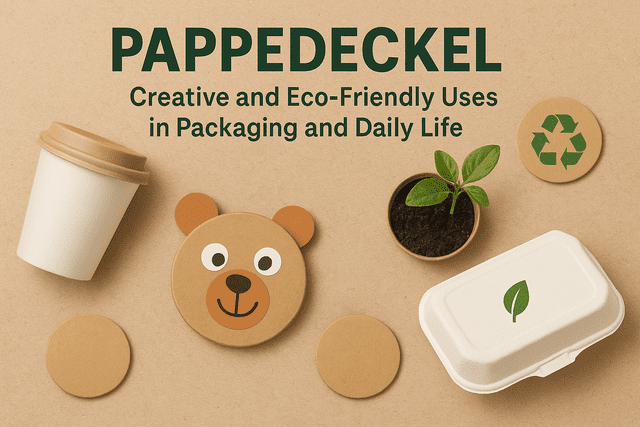
Pappedeckel: Creative and Eco-Friendly Uses in Packaging and Daily Life
What is a Pappedeckel?
The term Pappedeckel, derived from German, refers to a cardboard lid or disc, often made from recycled paperboard or pulp material. It’s a simple yet powerful product that plays a significant role in eco-conscious packaging and everyday life.
From coffee cup lids to creative arts and crafts, Pappedeckel are used in ways you might not even notice. What makes them stand out is their eco-friendliness, recyclability, and growing popularity as a sustainable alternative to plastic-based materials.
With the world shifting towards sustainability, the Pappedeckel is emerging as a symbol of green innovation in both industrial and domestic applications.
But the potential of Pappedeckel goes far beyond its conventional uses. In this extensive guide, we explore the versatility, environmental benefits, and surprising applications of Pappedeckel in packaging, creative projects, and daily routines.
The Evolution of Pappedeckel: From Utility to Sustainability
Originally, Pappedeckel was used in industrial and food packaging to cover containers, mainly coffee cups. Over time, its use expanded due to its affordability, customizability, and biodegradable nature.
Unlike plastic lids, which take hundreds of years to decompose, Pappedeckel can break down naturally in weeks or months.
As environmental awareness spread across industries, manufacturers began replacing plastic lids with paperboard-based Pappedeckel, especially in the food and beverage industry.
Today, it’s common to see cafes proudly sporting compostable Pappedeckel lids, promoting their eco-responsibility.
Why Pappedeckel Matters in a Sustainable World
As the world grapples with the consequences of plastic pollution, climate change, and overflowing landfills, materials like Pappedeckel offer a beacon of hope.
It aligns perfectly with global movements toward circular economies and zero-waste lifestyles.
Eco-Friendly Attributes of Pappedeckel:
- Biodegradable: Breaks down naturally without harming the environment.
- Recyclable: Can be recycled multiple times before its fibers become unusable.
- Low Carbon Footprint: Manufacturing requires minimal energy compared to plastic.
- Non-toxic: Made without harmful chemicals, safe for kids and food use.
Why Choose Pappedeckel Over Plastic?
Biodegradability
Plastic lids can remain in the environment for centuries, harming wildlife and ecosystems. Pappedeckel, on the other hand, is fully biodegradable, posing no threat to the environment.
Recyclability
Most Pappedeckel products are made from recycled paper or cardboard, and they can be recycled again, contributing to a circular economy.
Cost-Effective
Compared to specialized plastic lids, Pappedeckel is cheaper to produce and requires less energy during manufacturing.
Versatility
Pappedeckel can be molded, embossed, printed, laminated, or cut into different shapes and sizes, making it perfect for customization in branding or creative uses.
Environmental Impact: Pappedeckel vs. Plastic
Let’s get into the numbers.
Feature |
Pappedeckel |
Plastic Lid |
| Biodegradable | Yes (100%) | No |
| Recyclable | Yes | Limited, if clean |
| Carbon Footprint | Low | High |
| Decomposition Time | 60-90 days | Up to 1000 years |
| Cost (bulk) | Moderate | Slightly lower |
| Safe for food | Yes | Depends on material |
While plastic lids may be cheaper in some cases, the long-term environmental cost is enormous. Pappedeckel presents a more sustainable future.
Pappedeckel in Packaging: A Sustainable Alternative
Coffee Cup Lids and Sleeves
Let’s start with the obvious. The Pappedeckel is best known for its role in the takeaway coffee industry. Replacing plastic lids, it offers:
- A natural look and feel
- Insulation from heat
- No risk of microplastics seeping into your beverage
Food Packaging
Cardboard lids are gaining popularity in eco-friendly food containers, including:
- Soup and noodle containers
- Ice cream tubs
- Take-out boxes
- Lunch trays with cardboard compartments and lids
Bakery and Dessert Packaging
Delicate pastries need protective, breathable, and sustainable packaging. Enter Pappedeckel:
- Keeps moisture levels balanced
- Prevents spoilage without using plastic
- Customizable with branding for bakeries and cafés
Cosmetic and Skincare Boxes
Eco-conscious beauty brands use Pappedeckel for:
- Top covers for jars
- Lid inserts for boxes
- Product packaging sleeves
Packaging Inserts and Dividers
Brands use Pappedeckel to create custom inserts in boxes to hold items in place. This improves unboxing experience and reduces the need for bubble wrap or plastic fillers.
Product Protection
In packaging fragile items like electronics, ceramics, or glassware, Pappedeckel acts as a buffer layer to prevent breakage.
Interleaving Sheets
These are thin Pappedeckel discs placed between stacked items like pizza bases, bakery items, or meat patties to avoid sticking or damage.
Creative and Artistic Uses of Pappedeckel
DIY and Crafts
From kindergarten classrooms to adult workshops, Pappedeckel is a favorite for creative projects.
Ideas include:
- Mini canvases for painting
- Stencils and templates
- Kids’ masks and costume accessories
- Upcycled wall art
- Handmade greeting cards
Because Pappedeckel is easy to cut, color, glue, and paint, it’s a dream material for crafters and hobbyists alike.
Art and Craft Projects
Crafters love Pappedeckel for its malleability and rigid surface. It’s commonly used in:
- DIY greeting cards
- Decorative coasters
- Collage backgrounds
- Model building
Educational Tools
Teachers often turn to Pappedeckel for engaging educational tools:
- Flashcards
- Puzzles
- Math manipulatives
- Alphabet discs
It’s cheap, safe, and sturdy—everything you need for young learners.
Eco-Friendly Event Decor
Weddings and parties are using Pappedeckel for:
- Table numbers
- Invitation cards
- Party favor boxes
- Cake and cupcake toppers
Upcycled Wall Art
Pappedeckel discs and scraps can be turned into textured wall decor, signage, or frames, adding a rustic, natural feel to home interiors.
Home Organization
Why spend money on plastic bins and containers when Pappedeckel can help with home organization?
Try using it for:
- Drawer dividers
- Custom-labeled storage lids
- Temporary coasters
- Desk organizers and pen holders
Gardening Applications
Green thumbs, rejoice! Pappedeckel proves handy in eco-gardening:
- Use as seedling pots—simply plant them directly in soil.
- Make biodegradable plant markers.
- Use as mulch to suppress weeds.
Pappedeckel in Daily Life
Reusable Coasters
One of the simplest yet most useful applications is using Pappedeckel as drink coasters. They’re easy to design, replace, and recycle.
Plant Protection Discs
Gardeners use Pappedeckel as discs around plant stems to prevent weeds and retain moisture, especially in potted plants.
Compostable Plates or Bowls
Some thicker Pappedeckel forms can be molded into disposable plates or bowls, great for picnics or eco-conscious events.
Note Cards and Labels
Cut into smaller pieces, Pappedeckel works well as gift tags, business cards, or price labels, especially for handmade or organic products.
Industrial and Commercial Uses of Pappedeckel
Not just for home or hobby—Pappedeckel has plenty of industrial applications.
Branding and Marketing
Businesses love Pappedeckel for custom branding:
- Custom-printed lids for cafés
- Eco-friendly promotional items
- Packaging inserts with brand stories or QR codes
Shipping and Logistics
Eco-conscious logistics companies use Pappedeckel as:
- Box reinforcements
- Lid protectors
- Product separators
Hospitality Industry
Hotels and restaurants leverage Pappedeckel for:
- Disposable placemats
- Room service trays
- Eco take-away containers
Spacers and Liners in Shipping
Heavy industries use Pappedeckel as shock-absorbing pads or liners when transporting machinery or electronics.
Construction Templates
In construction, Pappedeckel can be used for pattern tracing, templating, and insulation boards due to its structural strength.
Paint Palettes or Mixing Boards
In painting or manufacturing, large Pappedeckel sheets serve as disposable palettes or mixing surfaces, reducing cleaning waste.
Pappedeckel and Children: Safe and Sustainable Fun
One of the most overlooked benefits of Pappedeckel is its safety for children. Non-toxic and soft-edged, it’s ideal for:
- Preschool crafts
- Coloring activities
- Interactive play objects
- Learning letters and shapes
Plus, since it’s recyclable and biodegradable, cleanup doesn’t hurt the planet.
Sustainability Benefits of Pappedeckel
Reduced Carbon Footprint
The production of Pappedeckel requires less energy and emits fewer greenhouse gases compared to plastics.
Supports Circular Economy
Most Pappedeckel is made from post-consumer materials and can be recycled back into new products, minimizing waste.
Safe for Wildlife and Oceans
Unlike plastic, which often ends up in oceans, Pappedeckel decomposes harmlessly in natural environments.
Promotes Conscious Consumerism
Brands using Pappedeckel signal their commitment to the planet, attracting eco-conscious consumers.
Pappedeckel as an Upcycling Material
You don’t throw away a good Pappedeckel. Instead, upcycle it.
Here’s how:
- Turn coffee cup lids into coasters
- Stack them for creative sculptures
- Make earring or jewelry holders
- Use as paint palettes for kids
- Cut into bookmarks or tags
The possibilities are endless.
Future Trends: Where is Pappedeckel Headed?
Integration with Smart Packaging
With QR codes or NFC chips embedded into Pappedeckel, brands can offer interactive packaging experiences.
Bio-Coating Enhancements
New Pappedeckel variants feature waterproof or oil-proof coatings made from biodegradable materials, expanding their usability.
Growth in E-Commerce Packaging
As e-commerce booms, the demand for eco-packaging like Pappedeckel inserts and sleeves is rising rapidly.
Customized Branding
Digital printing and laser cutting technologies allow for high-quality, low-cost customization, making Pappedeckel a go-to for small businesses.
Creative Businesses Using Pappedeckel Innovatively
Several startups and companies are pushing the envelope when it comes to cardboard lids and sustainable materials.
Examples:
- Ecoffee Cup: Uses Pappedeckel lids to pair with bamboo fiber cups.
- Tiny Box Company: Offers cardboard packaging lids for artisan products.
- Moo Free Chocolates: Uses biodegradable lids in festive packaging.
These businesses prove that sustainability doesn’t mean compromising on design or functionality.
How to Source and Customize Pappedeckel for Your Brand
- Work with local suppliers to reduce transportation emissions.
- Ask for FSC-certified or recycled paperboard
- Choose embossed or printed designs to enhance branding.
- Consider die-cut shapes for innovative product presentation.
- Always include recycling instructions on packaging to educate consumers.
How to Dispose or Reuse Your Pappedeckel
Not sure what to do with your Pappedeckel after use?
Eco Disposal Tips
- Compost it with your kitchen scraps.
- Tear it and mix it into your garden soil.
- Recycle it with paper/cardboard items.
Creative Reuse Ideas
- Use as a coaster.
- Use as a paint blotter.
- Use it as scratch paper or note cards.
DIY Ideas Using Pappedeckel
- Photo Frames – Cut Pappedeckel into shapes and decorate them with recycled fabric or paint.
- Notebook Covers – Use Pappedeckel as sturdy notebook or sketchbook covers.
- Custom Labels – Great for jars, bottles, or gifts during holidays.
- Mobile Holders or Stands – Craft lightweight stands for your smartphone or tablet.
- Organizers – Create desk drawer dividers or desktop organizers using cut pieces.
How Businesses Can Switch to Pappedeckel
Step 1: Evaluate Current Packaging
Audit your packaging process to see where plastic lids, dividers, or inserts are used.
Step 2: Calculate Cost Benefits
In many cases, switching to Pappedeckel saves on raw materials and long-term environmental fees.
Step 3: Test Prototypes
Create prototypes to test durability, appearance, and customer reception.
Step 4: Educate Consumers
Label your packaging with messages like “This lid is made from 100% biodegradable Pappedeckel.”
Challenges and How to Overcome Them
Moisture Sensitivity
Pappedeckel can become soggy when wet. Biodegradable coatings or wax layers help combat this.
Perception of Fragility
Some consumers may perceive paper as weaker than plastic. Highlight durability testing results and provide positive user testimonials.
Initial Design Costs
While switching requires an investment, the long-term cost savings and brand reputation boost far outweigh it.
Conclusion: The Power of Pappedeckel in Sustainable Living
The next time you grab your morning coffee or unwrap a pastry, take a moment to appreciate the Pappedeckel. It’s more than a cardboard lid—it’s a symbol of a growing shift towards creativity, sustainability, and conscious living.
From everyday uses at home to game-changing applications in industry, Pappedeckel proves that eco-friendly doesn’t mean boring or limiting. It means being smarter, more creative, and kinder to our planet.
So go ahead, reuse it, paint it, plant it—or simply compost it. One lid at a time, we can reduce waste and reimagine the future with the power of Pappedeckel.
FAQs About Pappedeckel
What is a Pappedeckel?
A Pappedeckel is a cardboard lid or disc typically made from recycled paperboard. It is used in packaging, food containers, crafts, and various eco-friendly applications.
How is Pappedeckel different from plastic lids?
Unlike plastic lids, Pappedeckel is biodegradable, recyclable, and eco-friendly. It decomposes naturally, reducing environmental harm and supporting sustainability.
Can Pappedeckel be used for hot beverages like coffee?
Yes, Pappedeckel is often used as coffee cup lids. They are heat-resistant and can be coated with biodegradable materials to handle hot liquids.
Is Pappedeckel safe for food contact?
Absolutely. Food-grade Pappedeckel is made from non-toxic, food-safe materials and is commonly used to cover soups, salads, desserts, and more.
Can Pappedeckel be customized for branding?
Yes, businesses can print logos, messages, or QR codes on Pappedeckel using digital printing, embossing, or laser cutting for effective brand visibility.
What are some creative uses of Pappedeckel at home?
Pappedeckel can be used for coasters, wall art, educational tools, event décor, plant guards, notebook covers, and more DIY craft projects.
Is Pappedeckel waterproof?
Standard Pappedeckel is not waterproof, but many variants come with biodegradable or compostable coatings that make them resistant to moisture and grease.
How can businesses switch from plastic to Pappedeckel?
Businesses can start by auditing current packaging, sourcing FSC-certified Pappedeckel, testing prototypes, and educating customers through eco-labeling.
Can Pappedeckel be recycled after use?
Yes, most Pappedeckel products are fully recyclable, especially if they are clean and free from food residue or non-biodegradable coatings.
Where can I buy Pappedeckel products?
Pappedeckel products are available through eco-packaging suppliers, craft stores, wholesale distributors, or custom manufacturers offering sustainable packaging solutions.
Can I compost Pappedeckel?
Yes. As long as it’s not coated in plastic or wax, it is compostable.
Is Pappedeckel cheaper than plastic?
In bulk, plastic may be marginally cheaper, but Pappedeckel offers a better long-term ROI due to its sustainable and brand-friendly appeal.
About The Author
