
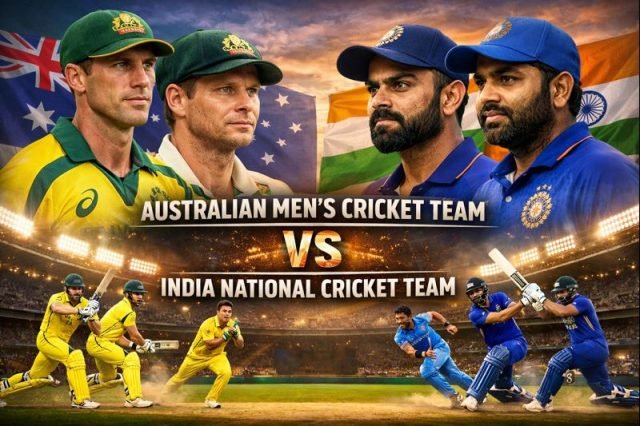
Australian Men’s Cricket Team vs India National Cricket Team Guide
Australian Men’s Cricket Team vs India National Cricket Team rivalry stands among the most intense, skill-driven, and emotionally charged contests in modern sport. Whenever these two sides meet, stadiums throb, television ratings surge, and conversations stretch from Melbourne cafés to Mumbai local trains.
The contest is never only about bat and ball; it mirrors contrasting cricket cultures—Australia’s hard-nosed competitiveness against India’s blend of flair, patience, and strategic depth.
Australian Men’s Cricket Team vs India National Cricket Team: Origins of a Rivalry
Cricket links Australia and India through more than seven decades of shared history. Australia toured India in 1956–57, and since then encounters have grown from polite engagements into headline-grabbing battles.
The rise of India as a powerhouse during the 2000s transformed the dynamic. Series victories on both soils proved that neither team holds permanent superiority.
The Border–Gavaskar Trophy, introduced in 1996, gave the rivalry a formal identity. Named after Allan Border and Sunil Gavaskar, it symbolizes respect between legends while highlighting the competitive edge that defines every series.
Matches are shaped by spinning tracks in Chennai, bouncy surfaces in Perth, and packed venues such as the MCG or Eden Gardens.
Contrasting Cricket Philosophies
Australia’s Approach
Australia traditionally relies on pace, aggression, and athletic fielding. Captains encourage positive declarations and relentless pressure. The culture values mental toughness; sledging and verbal duels have often accompanied their cricket.
India’s Approach
India blends technical batting artistry with world-class spin bowling. Over the last decade the team has added formidable fast bowlers, creating balance across conditions. The approach emphasizes patience, tactical flexibility, and depth in batting line-ups.
These differing philosophies ensure that Australian Men’s Cricket Team vs India National Cricket Team encounters rarely follow predictable scripts.
Memorable Eras and Turning Points
The 2001 Eden Gardens Miracle
One of cricket’s greatest Tests occurred when India, following on, chased an improbable target thanks to VVS Laxman’s 281 and Rahul Dravid’s epic support. Australia’s record 16-match winning streak ended, reshaping belief in Indian cricket.
The 2007–08 Controversies
The Sydney Test controversy involving umpiring decisions and the “Monkeygate” episode heightened emotions. Despite tension, the series reinforced the rivalry’s intensity and prompted reforms in player conduct.
India’s Historic 2018–19 Triumph in Australia
India became the first Asian side to win a Test series in Australia. Cheteshwar Pujara’s marathon runs and Jasprit Bumrah’s searing pace defined a landmark moment, proving India’s adaptability overseas.
The 2020–21 Comeback
After being bowled out for 36 in Adelaide, India fielded a depleted squad yet secured a 2–1 series win, culminating in the Gabba fortress being breached. The victory symbolized resilience and depth.
Key Players Who Shaped the Rivalry
- Sachin Tendulkar – Master of Australian conditions; centuries at Sydney and Melbourne remain iconic.
- Ricky Ponting – Aggressive leader whose battles with Indian spinners were legendary.
- Virat Kohli – Embodiment of modern competitiveness, matching Australia’s intensity.
- Steve Smith – Unorthodox genius, particularly dominant in Border–Gavaskar contests.
- Jasprit Bumrah & Pat Cummins – Pace spearheads representing the new era of fast bowling excellence.
Current Players: Heart and Soul of Today’s Rivalry
A major reason the Australian Men’s Cricket Team vs India National Cricket Team rivalry is so electrifying today is the presence of exceptional current players on both sides. These players are not only among the best in the world but also pivotal in shaping match outcomes when these teams meet.
Current Key Players — India National Cricket Team
India’s squad blends experience, tactical brilliance, and emerging talent—all of which significantly impact the team’s performance against Australia:
- Virat Kohli – One of modern cricket’s greatest batsmen, known for his intensity and consistency across formats. Kohli often delivers under pressure, especially in high-stakes contests against Australia.
- Rohit Sharma – The captain and opener, whose elegant stroke play and leadership inspire the middle order. His ability to anchor innings has been vital in series against tough opponents.
- Jasprit Bumrah – India’s premier fast bowler with lethal yorkers and precise control. Bumrah’s skills are especially crucial against strong batting lineups like Australia’s.
- Ravindra Jadeja – A dynamic all-rounder whose spin bowling and agile fielding change game dynamics.
- Ashwin – A master of spin, Ashwin poses continuous challenges on subcontinental tracks and is evolving his tactics on bouncier Australian wickets.
- Shubman Gill – An exciting young talent with impeccable technique and maturity beyond his years.
- KL Rahul – Slimmed down and confident, Rahul brings stability and elegance in the top order.
Together, these players provide India with versatility, match-winning potential, and tactical depth.
Current Key Players — Australian Men’s Cricket Team
Australia’s current squad also brims with match-winners whose performances fuel this heated rivalry:
- Pat Cummins – The captain and leading fast bowler, known for his aggressive leadership and ability to extract pace and bounce even under challenging conditions.
- Steve Smith – A batting genius with a unique technique, Smith consistently excels under pressure and has a remarkable record against India.
- Marnus Labuschagne – Australia’s dependable middle-order batsman, who thrives in gritty conditions and long Test innings.
- Cameron Green – A rising all-rounder with pace, power, and athleticism—able to impact matches with both bat and ball.
- Travis Head – A fiery left-handed batter whose aggressive stroke play can turn matches instantly.
- Mitchell Starc – One of the world’s fiercest left-arm pacers with a knack for strike bowling.
- Marcus Stoinis – Offers powerful hitting in the later overs in limited-overs formats.
These players drive Australia’s competitive edge and frequently produce match-defining performances in head-to-head battles.
Formats and Modern Context
Test Cricket
The purest form remains the soul of the rivalry. Five-day duels test technique and temperament. Spin versus pace narratives dominate discussions before every series.
One-Day Internationals
World Cup meetings add extra drama. Australia’s clinical chasing meets India’s tactical middle-overs game. Encounters in 2003 final and 2011 quarterfinal shaped generations.
T20 Internationals
Franchise cricket has blurred boundaries; teammates in the IPL become opponents internationally. Explosive batting, innovative bowling variations, and data-driven strategies mark this format.
Tactical Strategies in Modern Clashes
The rivalry today is not only about raw talent but also deep tactical planning:
- Spin vs Pace Balance: India often fields multiple spinners on turning tracks, whereas Australia counters with express pace and short-ball tactics.
- Batting Orders: Both sides adjust lineups based on conditions—promoting adaptable batsmen when early wickets fall.
- Field Placements: Smart fields and aggressive positions aim to build pressure and force mistakes.
- Data and Analytics: Teams now use analytics to identify weakness patterns and optimal bowling targets.
These strategies evolve with each series, keeping the rivalry unpredictable and exciting.
Tactical Battles
- Spin in India – Australia prepares with sweep shots and left-hand combinations to counter Ravichandran Ashwin and Ravindra Jadeja.
- Bounce in Australia – India deploys disciplined leaving outside off stump and counter-attacking lower orders.
- Fielding Standards – Direct hits and athletic catches often swing momentum.
- Mind Games – Press conferences and on-field chatter add psychological layers.
Impact of the IPL and Globalization
The Indian Premier League changed relationships. Australian stars like David Warner and Glenn Maxwell play alongside Indian teammates, fostering mutual understanding. Yet national pride reignites once colors change. Coaching exchanges, analytics sharing, and fitness methods now cross borders.
Historical Numbers and Statistical Trends
In hundreds of matches across formats, neither team holds long-term dominance. While Australia historically enjoyed an edge in the late 20th century, India has surged ahead with win records especially within the last decade.
Some key trends include:
- Close batting averages between leading run-scorers.
- Pace versus spin strike-rate comparisons highlighting strategic matchups.
- Win patterns often linked to key individual performances.
Whether in Tests, ODIs, or T20Is, statistical battles underline how evenly matched these sides continue to be.
Statistical Snapshot
- Hundreds of international matches across formats.
- Closely balanced win–loss records in recent years.
- Individual milestones: Tendulkar’s 3,000+ runs vs Australia; Smith’s prolific averages against India.
Numbers fluctuate, but competitiveness remains constant.
Culture, Fans & Media Spectacle
The Australian Men’s Cricket Team vs India National Cricket Team rivalry transcends match days—it permeates fan culture and media. From passionate chants in packed stadiums to social media fever, every moment is analyzed, debated, and celebrated. Commentary teams in English, Hindi, and regional languages bring each play to life, making the contests cultural events as much as sporting ones.
Impact of Franchise Cricket and Global Exchange
The rise of global T20 leagues, especially the Indian Premier League (IPL), has changed dynamics. Australian and Indian players often become teammates at the club level, creating cross-cultural respect. Yet when they face off in international colors, competitive instinct returns strongly, adding another layer of drama to Australian Men’s Cricket Team vs India National Cricket Team contests.
Women’s Influence and Grassroots Inspiration
Although the topic centers on men’s teams, the rivalry inspires women’s cricket growth in both nations. Young players model techniques after heroes from these contests, fueling academies from Bengaluru to Brisbane.
Recent Developments (2023–2025)
- Introduction of the World Test Championship cycles intensified planning.
- Emphasis on workload management for multi-format players.
- Use of artificial intelligence for match preparation, pitch analysis, and injury prevention.
- Emergence of new talents such as Yashasvi Jaiswal and Cameron Green adding fresh narratives.
Home Advantage and Pitch Debates
Every series sparks discussion on surfaces. India faces criticism for turning tracks; Australia for extra bounce and grass. The ICC’s rating system attempts balance, yet captains continue to seek conditions that suit strengths. These debates form part of the theatre of Australian Men’s Cricket Team vs India National Cricket Team showdowns.
Leadership Styles
- Australian Captains often project directness and assertive declarations.
- Indian Captains vary from MS Dhoni’s calm to Virat Kohli’s fire and Rohit Sharma’s composed tactics.
Leadership decisions—field placements, bowling changes, DRS calls—frequently decide tight sessions.
Fan Narratives
Supporters craft their own folklore: the Bharat Army’s chants, Australian “Barmy Army” style groups, and digital meme cultures. Ticket demand for Melbourne Boxing Day Tests or Ahmedabad blockbusters sells out within hours.
Media and Broadcast Evolution
High-definition cameras, stump mics, and ultra-edge technology expose every nuance. Expert panels dissect techniques frame by frame. The rivalry drives advertising revenue and sponsorships across continents.
Future Prospects
The next decade promises:
- More five-Test Border–Gavaskar series.
- Day–night Tests becoming common.
- Greater player rotation due to packed calendars.
- Rising competition from younger nations, making each bilateral result more crucial for rankings.
Coaching and Preparation
Australia invests in pace academies and sports psychology. India emphasizes spin laboratories and domestic tournaments like Ranji Trophy and IPL as feeders. Exchange programs and county stints enrich skills.
Ethical and Spirit-of-Cricket Debates
From sledging lines to send-off gestures, the rivalry often tests boundaries of sportsmanship. Governing bodies encourage respect while acknowledging that passion cannot be sterilized.
Economic Dimensions
Series between these teams generate massive tourism and broadcasting income. Cities hosting matches witness surges in hotel bookings and merchandise sales. The contest sustains thousands of jobs.
Technology and Data
Teams now analyze wagon wheels, release points, and fatigue metrics. Decisions on whether to play an extra spinner or seamer rely on algorithms as much as instinct.
Education Through Cricket
Schools in both countries use famous matches to teach mathematics (run rates), physics (swing), and history (colonial links). The rivalry thus enters classrooms and documentaries.
Environmental and Scheduling Concerns
Climate change affects pitch preparation and match timings. Heat rules in Australia and air-quality issues in Indian metros require adaptive scheduling.
Iconic Venues
- Melbourne Cricket Ground – colosseum-like atmosphere.
- Eden Gardens – sea of passionate supporters.
- Sydney Cricket Ground – traditional spin-friendly beauty.
- Wankhede Stadium – birthplace of many Indian triumphs.
Each ground contributes its own personality.
Grassroots Heroes
Local club cricketers mimic strokes of Kohli or cover drives of Smith. Coaches use footage from these series to teach temperament under pressure.
Broadcasting Voices
Commentators such as Ravi Shastri, Adam Gilchrist, Harsha Bhogle, and Mark Taylor narrate the rivalry with poetic insight, shaping public memory.
The Human Element
Behind statistics lie families traveling, injuries endured, and personal comebacks. The 36 all-out recovery in 2021 or Smith’s return after suspension reveal stories of redemption.
Conclusion
The saga of Australian Men’s Cricket Team vs India National Cricket Team continues to evolve like a long novel with new chapters every season. No other bilateral contest blends skill, commerce, culture, and emotion so completely. Whether played under the Australian sun or Indian floodlights, the duel remains cricket’s crown jewel.
FAQs – Australian Men’s Cricket Team vs India National Cricket Team
Why is Australian Men’s Cricket Team vs India National Cricket Team rivalry so popular?
Because both sides are consistently top-ranked, possess massive fan bases, and play contrasting styles that produce unpredictable results.
What is the Border–Gavaskar Trophy?
It is the Test series trophy contested between the Australian Men’s Cricket Team vs India National Cricket Team since 1996, honoring Allan Border and Sunil Gavaskar.
Which series has been most memorable?
India’s 2018–19 Test series win in Australia and the remarkable 2020–21 comeback series stand out.
How has T20 cricket affected the rivalry?
T20 leagues like the IPL have increased familiarity among players while intensifying international competition.
Who are current key players in Australian Men’s Cricket Team vs India National Cricket Team contests?
Players such as Virat Kohli, Rohit Sharma, Jasprit Bumrah, Steve Smith, Pat Cummins, and emerging talents like Jaiswal and Green.
What conditions favor each team?
Spin-friendly pitches aid India; bouncy tracks assist Australia’s pacers.
How do fans influence matches?
Crowd energy often shifts momentum, especially in venues like MCG and Eden Gardens.
Do these teams also play in the T20 World Cup?
Yes, both teams frequently face each other in global T20 events.
How has technology influenced this rivalry?
Teams use analytics, performance tracking, and data strategies for match preparation.
Are day–night Tests part of the rivalry?
Yes, pink-ball matches are becoming regular features.
Which format is most competitive?
Tests are considered the truest measure, though ODIs and T20Is draw huge audiences.
What is the future outlook for Australian Men’s Cricket Team vs India National Cricket Team?
Expect longer series, advanced analytics, and continued global attention.
About The Author
