
5 Key Considerations When Using Bottle-Top Dispensers in Pharmaceutical Labs
Bottle-top dispensers are essential tools used in pharmaceutical labs because they allow and accurate dispensing of liquid reagents. By using them, you can ensure that whatever you measure is accurate and precise. This is important in high-stakes environments where even minor measurement discrepancies can alter research outcomes and product quality. The article will discuss the five critical factors to consider when using bottle top dispensers to optimize their function and ensure safe operation in pharmaceutical applications.
What are Bottle-Top Dispensers?
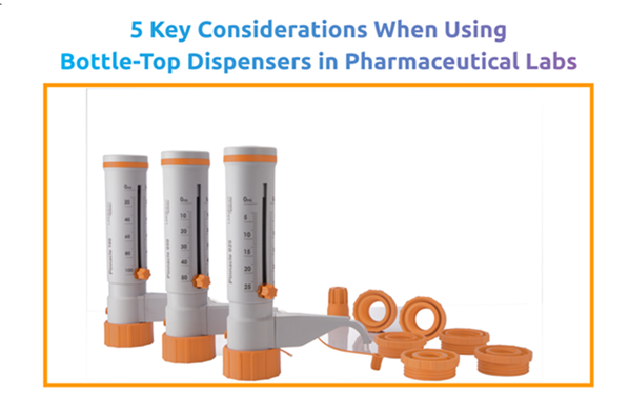
Bottle-top dispensers are laboratory tools designed to safely and precisely dispense liquid chemicals, reagents, solvents. This is especially useful for dealing with safe handling of hazardous or strong chemical reagents. They can withstand harsh chemicals and prevent contamination during experiments. These dispensers can be adjusted to dispense varying volumes of liquid and are made from durable, chemically resistant materials, making them ideal for use in scientific and medical labs that use scientific glassware.
Top 5 Things to Keep in Mind When Using Bottle-Top Dispensers in Pharma Labs
1. Accuracy and Precision in Dispensing
Bottle top dispensers are highly valued for their ability to deliver accurate and reproducible liquid volumes, which is important in pharmaceutical settings where precision is non-negotiable. Consider these factors:
- Calibration Capabilities: Look for dispensers with easy DIY calibration features to maintain accuracy over time, like the LabQuest next-generation dispenser from Borosil Scientific, which offers enhanced safety and easy calibration with the built-in tool and position marker.
- Volume Range Suitability: Choose a dispenser that matches the typical volume range used in your lab. Dispensers like the Research Model & Pinnacle come in six sizes, catering to a broad spectrum from 0.25 to 100 mL, ensuring you can cover various tasks precisely.
- Recirculation Valve: This feature prevents reagent loss by recirculating the liquid back into the bottle during priming, thus ensuring that every drop dispensed is accounted for and accurate.
2. Chemical Compatibility
Given the diverse chemicals used in pharmaceutical labs, from aggressive solvents to sensitive biological compounds, the material construction of your dispenser is as crucial as the scientific glassware that holds it.
- Materials of Construction: Opt for dispensers made from materials like Borosilicate glass, FEP, PTFE, and PFA. These materials offer high chemical resistance, making them suitable for handling everything from acids and bases to organic solvents.
- Compatibility Check: Ensure that your dispenser can handle the specific chemicals used in your lab. Borosil Scientific dispensers offer features like a QR code for easy access to chemical compatibility charts, simplifying this verification process.
3. Adaptability to Various Reagent Bottles
The ability to fit different reagent bottles is not just about convenience but also about reducing cross-contamination and enhancing workflow efficiency.
- Wide Range of Adapters: Dispensers that come with a variety of adapters, such as 28, 32, 36, 38, 40, and 45 mm bottle top adapters, offer flexibility and ensure that the dispenser can be used with virtually any reagent bottle in your lab.
- 360° Working Position: A dispenser that can be adjusted to work at any angle around the bottle can greatly enhance ease of use and safety, ensuring that the dispenser’s orientation always allows for comfortable and safe operation.
4. Safety Features
Safety in the lab is non-negotiable, particularly when handling hazardous chemicals.
- Built-in Safety Features: Look for dispensers with safety splash guards to prevent accidental spillage and discharge tube ejections, essential for maintaining a safe working environment.
- Safe Handling Practices: Ensure that all lab personnel are trained in properly operating bottle-top dispensers, including how to attach and detach them from bottles safely and effectively operate the safety features.
5. Maintenance and Cleaning
Proper maintenance and regular cleaning are essential to extend the lifespan of bottle-top dispensers and ensure their continued accuracy and safety.
- Ease of Cleaning: Choose dispensers that are easy to disassemble and clean, preferably without the need for specialized tools. Materials resistant to corrosion and chemical damage will simplify cleaning processes and prevent contamination.
- Regular Maintenance Checks: Implement a routine maintenance schedule to check for wear and tear, especially in dispensers frequently used with aggressive chemicals. Regular calibration and testing for accuracy should also be part of the maintenance routine.
Improve User Ergonomics and Accessibility
Ergonomic design also applies to the use of bottle-top dispensers in pharmaceutical labs. An ergonomic design dispenser enhances productivity and reduces the possibility of repetitive strain injuries, a common occurrence in lab settings. When choosing a dispenser, consider lightweight models that can be easily operated with one hand.
In addition, flexible discharge tubes and the 360° rotation facility allow for operating from any angle, enhancing accessibility and user comfort. This is particularly useful in busy labs, where efficiency and high usability are vital because staff have to spend a long time working without any discomfort.
Conclusion
When selecting and using a bottle top dispenser in pharmaceutical labs, considering these five key aspects can greatly enhance both safety and efficiency. Accurate dispensing, chemical compatibility, adaptability, safety, and ease of maintenance are critical factors that ensure these tools contribute positively to your scientific work. With the right dispenser, such as those from Borosil Scientific, equipped with advanced features like recirculation valves, Safety Splash Guard, and wide adaptability, labs can achieve reliable and consistent results, which are essential for the demanding pharmaceutical research standards.
About The Author
