
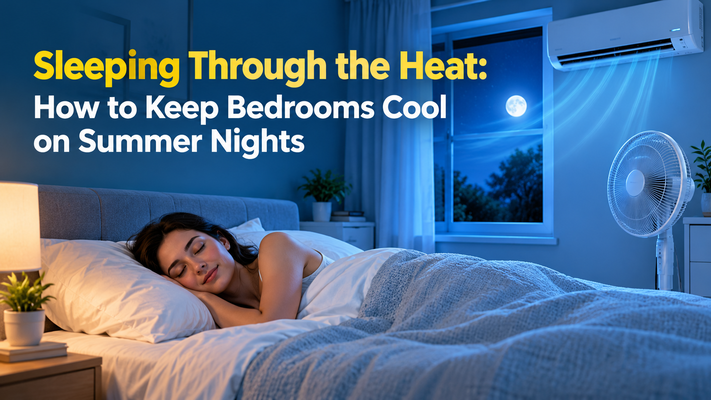
Sleeping Through the Heat: How to Keep Bedrooms Cool on Summer Nights
There are few things more frustrating than lying awake on a hot summer night. The sheets feel sticky, the pillow is warm, the fan seems to push hot air around the room and every hour on the clock passes slowly. Poor sleep during heatwaves affects mood, concentration, productivity and health. For children, older people and anyone with medical conditions, hot nights can pose real risks.
Keeping bedrooms cool requires a combination of smart habits, home improvements and, often, effective cooling.
Why Heat Disrupts Sleep
The body naturally lowers its core temperature in preparation for sleep. When bedrooms are too warm, this process is disrupted, making it harder to fall asleep and stay asleep. Sleep researchers often suggest a bedroom temperature somewhere around the high teens to low twenties as comfortable for many people, though individual preferences vary.
High humidity makes things worse, as sweat evaporates less effectively, reducing the body’s ability to cool itself.
Block the Heat During the Day
The best way to keep bedrooms cool at night is to stop them heating up during the day. Close curtains and blinds on sun-facing windows, particularly west-facing windows that receive afternoon sun. External shading, such as awnings, shutters and outdoor blinds, is even more effective, stopping heat before it reaches the glass.
Keep bedroom doors closed during the day if the rest of the house is warmer.
Ventilate When It Cools
If outside temperatures drop in the evening, open windows to let cooler air in and create cross-ventilation. Secure flyscreens keep insects out. Close windows again in the morning before temperatures rise.
Ceiling Fans
Ceiling fans use relatively little electricity and create a cooling breeze that makes rooms feel several degrees cooler. Ensure fans rotate in the correct direction for summer, pushing air downward. Pedestal fans are a portable alternative.
Bedding Choices
Lightweight, breathable bedding helps. Cotton, linen and bamboo sheets wick moisture and allow airflow. Cooling mattress toppers and pillows are available. Swap heavy doonas for light blankets or a single sheet.
Evening Habits
Take a lukewarm shower before bed to lower body temperature. Avoid heavy meals, alcohol and caffeine close to bedtime. Stay hydrated throughout the day. Keep electronics, which generate heat, out of the bedroom where possible. A cool, dark and quiet room supports deeper sleep all year round.
Insulation and Glazing
Ceiling insulation reduces heat transfer from hot roof spaces into bedrooms. Wall insulation, roof ventilation, reflective roof coatings and double glazing all help keep bedrooms cooler.
Air Conditioning for Bedrooms
For many households, particularly in hot climates and during heatwaves, air conditioning provides the most reliable solution for sleep. Split systems in bedrooms allow individual control and can be run on quiet, energy-efficient settings overnight.
Professional residential air conditioning Installation ensures systems are correctly sized for each bedroom, positioned so airflow does not blow directly onto beds and installed to run quietly and efficiently through the night, which makes a real difference to sleep quality.
Quiet Operation
Noise matters in bedrooms. Choose systems with low indoor noise ratings and use sleep or night modes that reduce fan speed and gradually adjust temperature. Position outdoor units away from bedroom windows where possible.
Efficient Use Overnight
Set thermostats to moderate temperatures, use timers to switch systems off after you fall asleep, or use sleep modes that adjust temperature gradually. Pre-cooling the bedroom for an hour before bed can allow the system to run more gently overnight.
Children and Babies
Babies and young children are particularly vulnerable to heat. Dress them in light clothing, use breathable sleeping bags rather than blankets and keep rooms at comfortable temperatures. Follow safe sleep guidelines and consult health professionals if concerned.
Heatwave Safety
During extreme heat, check on elderly neighbours and relatives, keep pets cool and know the signs of heat-related illness, such as dizziness, nausea, headache and confusion. Seek medical help if symptoms are severe.
Sharing a Bedroom
Couples often disagree about the ideal sleeping temperature. Separate lightweight blankets rather than one shared doona allow each person to adjust their own warmth. A small fan on one side of the bed can help the person who runs hot without chilling their partner. Some air conditioners offer airflow direction controls that can be set to avoid blowing directly on either person.
Planning Ahead of Summer
Installers become very busy once the first heatwave arrives. Booking installation or servicing in spring, before demand peaks, makes it far easier to secure a convenient time and ensures the system is ready when the hot nights begin. Servicing existing units before summer also catches problems early, such as low refrigerant or blocked drains.
Rest Easy
Hot nights do not have to mean sleepless nights. By blocking heat during the day, ventilating wisely, choosing breathable bedding and using efficient cooling where needed, households can enjoy restful sleep even through the hottest summers.
About The Author
