
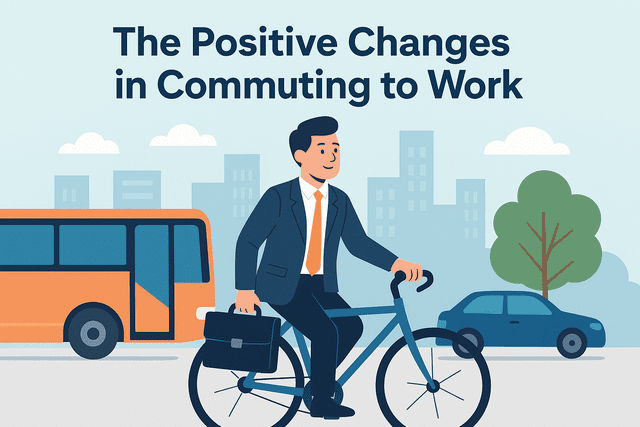
The Positive Changes in Commuting to Work
Long commutes, congested public transit, and the strain of strict timetables were all part of the commute to work for many years.
In recent years, the conventional commute model—which involves going to work five days a week, frequently at the same times every day—has experienced a significant change.
The way individuals commute to work has changed as a result of a number of factors, including growing awareness of sustainability, shifting workplace cultures, and technological improvements.
These days, commuting is becoming more adaptable, effective, and in line with environmental and personal well-being objectives.
In addition to improving workers’ quality of life, this move has significant effects on the economy, urban planning, and even the fight against climate change.
The Growth of Hybrid and Remote Work
The growing popularity of remote and hybrid work arrangements is one of the biggest shifts in commute habits.
A trend that was already beginning to take shape was hastened by the COVID-19 epidemic, demonstrating that many jobs may be completed from home.
Millions of workers no longer have to commute every day, which reduces travel expenses and time. Peak commuting loads have also decreased as a result of hybrid arrangements, in which workers divide their time between the office and their homes.
People may now schedule their journey during off-peak hours thanks to this new framework, which makes corporate transportation more effective and less stressful.
The Development of Sustainable Transportation Alternatives
The increased focus on eco-friendly transportation is another encouraging development in commuting. People and governments alike are looking for more environmentally friendly travel options as a result of the urgent concerns around climate change.
The popularity of walking, bicycling, and electric scooter use is rising, particularly in communities that have made investments in pedestrian-friendly streets and bike lanes.
Electric buses and trains that run on renewable energy are another example of how public transportation systems are updating.
Furthermore, finding practical employee shuttle services might assist us in reducing the number of automobiles on the road, which lowers emissions and lowers individual commuter costs.
These environmentally friendly decisions offer health advantages like more physical exercise for commuters and are a reflection of a larger cultural movement toward sustainability.
The Function of Technology in Simplifying Transportation
The way individuals commute is changing significantly due in large part to technology. Real-time data-powered navigation apps assist commuters in choosing the quickest routes and avoiding traffic jams.
By removing the need to carry cash or stand in line, mobile ticketing systems for public transportation have simplified the procedure.
The emergence of micro-mobility options, like e-scooters and shared bicycles, offers a practical last-mile connection, spanning the distance between transit stops and places of employment.
Furthermore, by lowering accidents, increasing efficiency, and giving passengers more time to work or unwind while traveling, developments in autonomous vehicles hold the potential to completely transform commuting in the near future.
Infrastructure Upgrades and Urban Planning
To adapt to the new commuter patterns, cities all around the world are reevaluating their infrastructure. In order to minimize the need for lengthy journeys, urban planners are giving preference to mixed-use developments that include residential, business, and recreational areas close to one another.
Governments are concentrating on growing networks and improving their dependability, which is speeding up investments in public transit systems.
To lessen traffic and enhance air quality, some towns are experimenting with low-emission districts and car-free zones.
These modifications not only make commuting more enjoyable, but they also make cities healthier and more habitable.
The Advantages of Changing Commuting for Humans
The enhancement in quality of life is arguably the most significant result of altering commuting habits. People have more time in the day for hobbies, family, and personal well-being when commuting takes less time.
People with flexible schedules can better combine their work and personal lives and escape the stress of rush-hour traffic.
As more people include walking and cycling in their daily routines, health results are also increasing. Workers who are less anxious about commuting are more attentive, innovative, and involved at work, according to employers.
Routine, stressful daily travel is no longer the norm for commuting to work. Rather, it is changing into a more technologically advanced, adaptable, and sustainable experience.
Commuting will become more than just a way to get from point A to point B as governments, businesses, and commuters themselves continue to adopt these improvements; it will be a crucial component in creating a better, healthier future.
About The Author
