
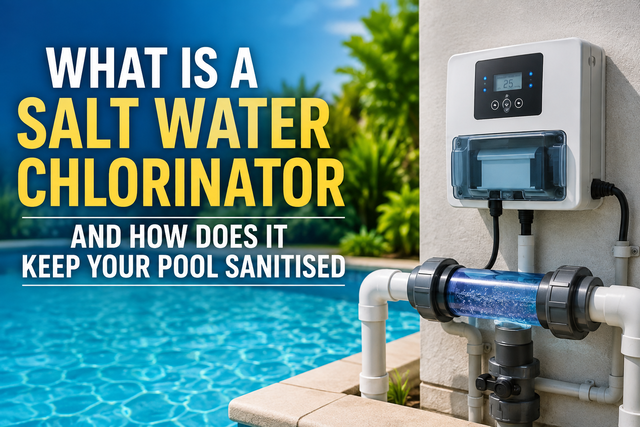
What Is a Salt Water Chlorinator and How Does It Keep Your Pool Sanitised?
Keeping pool water clear and hygienic depends on maintaining the right level of sanitiser. While chlorine can be added manually, a salt water pool chlorinator gives pool owners another way to maintain chlorine levels without repeatedly dosing the pool with liquid, tablets, or granules.
The system uses salt already dissolved in the pool water to produce chlorine as the water circulates. That chlorine performs the sanitising work needed to control bacteria, algae, and other contaminants. Understanding this process can make it easier to look after your chlorinator and recognise when chlorine production may need adjusting.
What Is a Salt Water Chlorinator?
A salt water chlorinator is a pool sanitation system that converts dissolved salt into chlorine. The system consists of a control unit and a chlorinator cell, which is installed as part of the pool’s circulation system.
A measured amount of salt is added to the pool water and dissolved. As the water passes through the chlorinator cell, an electrolysis process converts some of the salt into chlorine. The chlorine then circulates through the pool and helps sanitise the water.
The salt itself does not directly clean the pool. Instead, it provides the raw material needed for the chlorinator to generate chlorine. Once the sanitising process has taken place, the chlorine eventually converts back into salt, allowing the cycle to continue.
How Does a Salt Water Chlorinator Work?
The process starts when the pool pump moves water through the filtration system and into the chlorinator cell. As the salty pool water passes through the cell, an electrical current triggers electrolysis, converting some of the dissolved salt into chlorine.
The newly produced chlorine then returns to the pool with the circulating water. It helps control bacteria, algae and other contaminants that enter the pool through swimmers, dust, leaves and the surrounding environment.
The control unit allows chlorine production to be adjusted based on factors such as pool size, water temperature and how often the pool is used. Regular water testing is still important because a salt water chlorinator does not replace filtration, water balancing or routine pool maintenance.
How Does a Salt Water Chlorinator Keep Your Pool Sanitised?
A salt water chlorinator supports ongoing sanitation by producing chlorine while the pool circulation system is running. This provides a steady way to introduce chlorine into the water instead of depending solely on occasional manual dosing.
Helps Control Bacteria and Other Microorganisms
Swimming pools can collect bacteria and other microorganisms from swimmers, rain, dust and surrounding areas. Chlorine helps control these unwanted contaminants by damaging microorganisms and reducing their ability to survive in the water.
Maintaining an appropriate chlorine level is important because insufficient sanitiser can allow microorganisms to multiply. A properly adjusted chlorinator can help maintain the chlorine level needed for routine pool sanitation.
Helps Prevent Algae Growth
Algae can become a problem when chlorine levels are too low, particularly during warm weather or periods of heavy pool use. Green, yellow or black algae can make pool surfaces look dirty and may make the water cloudy.
By continuously producing chlorine, a salt water chlorinator can help maintain conditions that are less favourable for algae growth. However, severe algae outbreaks may still require additional treatment and thorough cleaning.
Provides a More Consistent Supply of Chlorine
One of the main advantages of a chlorinator is its ability to generate chlorine as part of the normal pool circulation cycle. This can make chlorine management more convenient than manually adding sanitiser at frequent intervals.
The correct production setting depends on several factors, including pool volume, swimmer load and water temperature.
Supports Clearer and Cleaner Pool Water
Effective sanitisation works alongside filtration to keep pool water clean. Chlorine deals with microorganisms and organic contaminants, while the filtration system captures suspended particles and debris.
When chlorine levels, filtration and water balance are properly managed, the pool is more likely to remain clear and pleasant to swim in. Regular maintenance remains important even when a salt chlorinator is installed.
How Installation Affects Chlorinator Performance
The way a salt water chlorinator is installed can influence how efficiently it operates and how consistently it produces chlorine. The system needs to be correctly sized for the pool and positioned properly within the circulation setup so water can move through the chlorinator cell as intended.
Factors such as pool volume, water flow, equipment compatibility and expected chlorine demand can all affect which chlorinator is suitable. Working with a qualified pool builder in Ballarat can help ensure the chlorinator is matched to the pool’s size, circulation system and sanitation needs.
Final Thoughts
A salt water chlorinator uses electrolysis to produce chlorine from salt dissolved in pool water. The generated chlorine helps control bacteria, microorganisms and algae while providing a steady supply of sanitiser during normal pool operation.
The system does not make pool maintenance automatic. Water chemistry still needs to be tested, the filter needs attention, and the chlorinator cell requires periodic inspection and cleaning. With the right settings and routine care, however, a salt chlorination system can be a convenient option for maintaining pool hygiene.
Frequently Asked Questions
Does a salt water chlorinator use chlorine?
Yes. A salt water chlorinator produces chlorine through electrolysis. The chlorine is then used to sanitise the pool water. The difference is that the system generates chlorine from dissolved salt rather than requiring all chlorine to be added manually.
How does a salt water chlorinator sanitise pool water?
The chlorinator cell uses electrolysis to generate chlorine as salty pool water passes through it. The chlorine circulates through the pool and helps control bacteria, microorganisms and algae.
How often should a salt chlorinator cell be cleaned?
The cleaning frequency depends on water chemistry, calcium build-up, pool usage and the manufacturer’s recommendations. Inspecting the cell regularly can help identify deposits before they affect performance. Follow the manufacturer’s instructions when cleaning to avoid damaging the cell.
How long does a salt water chlorinator cell last?
A chlorinator cell commonly lasts several years, although its service life varies according to the model, operating hours, water chemistry and maintenance. Keeping the pool water properly balanced and cleaning the cell as recommended can help extend its working life.
Can a salt water chlorinator replace chlorine completely?
No. A salt water chlorinator does not eliminate chlorine from the sanitation process. Instead, it generates chlorine from salt. Pool owners still need to monitor chlorine levels and maintain appropriate water chemistry to keep the pool safe and clean.
About The Author
