
Crazy Paving: The Revival of an Organic Trend in Architecture and Exterior Design
What makes an outdoor space feel truly unique? Why are designers moving away from perfectly uniform surfaces and embracing irregular, natural forms? How can a simple paving technique transform a garden, courtyard, or architectural landscape into something more artistic and connected to nature? The answer lies in the renewed popularity of crazy paving — a design approach that celebrates individuality, texture, and the beauty of imperfection.
In the world of architecture and exterior design, trends often move in cycles. Materials and styles that were once considered outdated can return with renewed relevance, reinterpreted through modern techniques and contemporary aesthetics. Crazy paving is one of the most striking examples of this revival. Once associated with mid-century gardens, traditional country homes, and informal outdoor spaces, it has now become a sophisticated design feature used in modern landscapes, luxury residences, and architectural projects around the world.
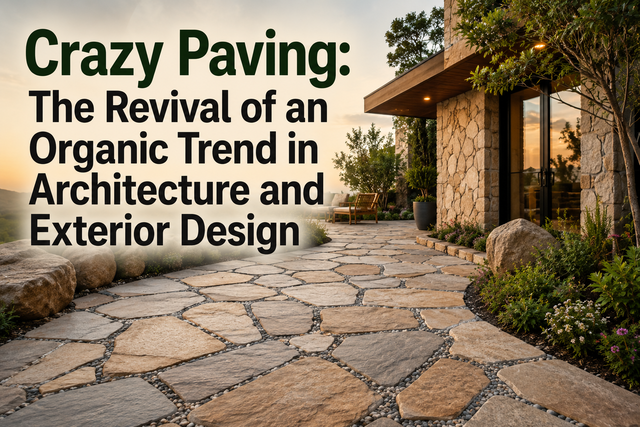
Crazy paving refers to the use of irregularly shaped pieces of stone, concrete, ceramic, or other materials arranged together to create a paved surface. Unlike conventional paving, which relies on uniform rectangular or square slabs, crazy paving celebrates variation. The pieces are fitted together like a mosaic, producing a pattern that appears spontaneous while often requiring careful planning and skilled craftsmanship.
Traditionally, crazy paving was created using leftover or naturally broken stone pieces, making it an economical and practical solution for outdoor surfaces. Materials such as sandstone, slate, limestone, and flagstone were commonly used. Today, designers have expanded the concept by incorporating modern concrete products, recycled materials, porcelain tiles, and custom-cut stones to achieve different visual effects.
The defining feature of crazy paving is its irregularity. Each installation is different, with unique shapes, textures, and patterns that give outdoor spaces a handcrafted character. Modern manufacturers have also developed products inspired by this traditional style, with crazy pave tiles offering homeowners and designers a convenient way to achieve an organic, stone-like appearance while maintaining consistency in quality and installation.
Why Is Crazy Paving Becoming Popular Again?
The renewed interest in crazy paving reflects several broader movements within architecture and design. Modern homeowners and designers are increasingly looking for spaces that feel personal rather than mass-produced. In contrast to highly structured paving systems, crazy paving offers a sense of individuality because no two surfaces are exactly alike.
Another reason for its popularity is the growing influence of natural design principles. Contemporary architecture is increasingly focused on creating connections between buildings and the landscape. Organic shapes, natural materials, and imperfect textures help outdoor spaces feel more integrated with their environment.
Crazy paving fits perfectly into this approach. Its uneven lines and natural stone textures soften architectural structures, creating a transition between built spaces and gardens. Whether used around a minimalist concrete home or a traditional brick property, it introduces warmth and visual interest.
A Perfect Match for Modern Landscaping
One of the strongest applications of crazy paving is in landscape design. Outdoor areas have become an extension of the home, with patios, terraces, and gardens being designed as functional living spaces rather than simple decorative areas.
Crazy paving works particularly well in outdoor entertaining areas because it creates a relaxed, informal atmosphere. A patio made from irregular stone slabs can feel more inviting than a perfectly symmetrical tiled surface. The natural variation encourages a slower, more tactile experience of the space.
Garden designers also use crazy paving for pathways, stepping areas, pool surrounds, and courtyard floors. The organic patterns can guide movement through a landscape while adding a sculptural quality to the design. When combined with planting, gravel, water features, or wooden elements, crazy paving creates a balanced relationship between hard and soft landscaping.
Sustainability and the Appeal of Imperfection
Sustainability has become a major influence on architectural choices, and crazy paving aligns well with environmentally conscious design. Historically, the technique made efficient use of irregular stone pieces that might otherwise have been discarded. Modern interpretations continue this principle through the use of reclaimed materials and recycled paving products.
The style also supports the broader movement toward “imperfect beauty” in design. For decades, architecture often emphasized precision, symmetry, and flawless finishes. Today, many designers are embracing natural variations, weathering, and signs of craftsmanship.
Crazy paving reflects this philosophy. Small differences between stones, uneven edges, and changing textures become design features rather than imperfections. The result is a surface that can age gracefully and develop more character over time.
Combining Traditional Techniques with Contemporary Design
Although crazy paving has historical roots, modern architects are finding innovative ways to incorporate it into contemporary projects. The contrast between irregular paving and clean architectural forms can create a powerful visual effect.
For example, a minimalist house with large glass walls and sharp geometric lines can be softened by a natural stone crazy-paved terrace. Similarly, modern urban courtyards can use irregular paving to introduce warmth into otherwise industrial environments.
Designers are also experimenting with new layouts. Traditional crazy paving often focused on tightly fitted stones with minimal gaps, but contemporary versions may include wider joints filled with moss, gravel, or ground-cover plants. This creates a more ecological appearance and allows the paving to blend seamlessly with surrounding vegetation.
The Future of Crazy Paving
As exterior design continues to move toward personalization, sustainability, and nature-inspired aesthetics, crazy paving is likely to remain an influential trend. Its appeal comes from its flexibility: it can look rustic or modern, artistic or understated, depending on the materials and installation style.
The popularity of crazy paving also reflects a wider cultural shift toward valuing craftsmanship and uniqueness. In an era dominated by standardized products and digital precision, handmade-looking surfaces offer something different — a sense of history, character, and connection.
Rather than being a temporary design trend, crazy paving represents a timeless approach to creating outdoor environments. It celebrates natural materials, creative expression, and the beauty of variation. Whether used in a private garden, a luxury residential project, or a public landscape, crazy paving demonstrates that some of the most memorable designs are created not through perfect uniformity, but through thoughtful irregularity.
As architecture and exterior design continue to evolve, the return of crazy paving proves that old ideas can find new life when they are reimagined for contemporary needs. Its combination of practicality, visual appeal, and organic character makes it one of the most exciting surface design trends shaping outdoor spaces today.
About The Author
